Enhanced Navigation Experience — a category that goes beyond aesthetics and propulsion to focus on how captains, crews, and even owners interact with their yachts. It is about precision, safety, efficiency, and comfort, delivered through advanced technologies that are increasingly intuitive and sustainable.
Smart Helm Stations
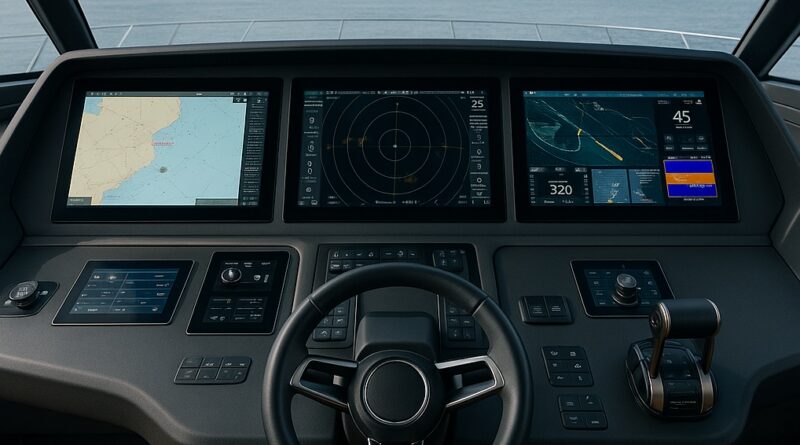
The modern helm is evolving into a digital command centre. Multi-display touchscreens integrate radar, sonar, chart plotting, propulsion controls, and energy management systems into one interface. Yacht operators can monitor everything from fuel consumption to battery status, while predictive software suggests the most efficient cruising speeds. This reduces crew workload and enhances decision-making, even for less experienced owner-operators.
Assisted Docking and Manoeuvring
Docking remains one of the most delicate manoeuvres in yachting, but sensor-based assisted docking systems now provide centimetre-level precision. Using GPS, cameras, and AI algorithms, these systems automatically adjust thrusters and rudders to stabilise the vessel. Some builders are going further, offering fully automated docking sequences at the push of a button, reducing stress in crowded marinas.
Augmented Reality at Sea
The adoption of augmented reality overlays is reshaping how navigators perceive their environment. Data such as depth, obstacles, and collision risks can now be projected directly onto windshields or helm displays. This reduces reaction time in tight channels or during night navigation, providing a safer, clearer situational awareness.
Energy-Aware Navigation
With the rise of hybrid and electric yachts, navigation software is now linked to energy optimisation systems. Captains can view in real time how propulsion choices affect range and emissions, while the system calculates the most efficient use of sails, batteries, and generators. For long passages, this ensures not only safety but also sustainable cruising strategies.
Connectivity and Predictive Insights
High-speed satellite links allow yachts to receive live updates on weather, traffic separation zones, and port congestion. Some advanced systems integrate AI-powered route optimisation, which automatically adjusts the course to minimise fuel burn, avoid adverse conditions, or reduce noise and vibration. Predictive maintenance alerts also ensure that navigation equipment operates reliably throughout long voyages.
Towards Autonomy
These developments lay the foundation for semi-autonomous yachting. While the industry is not yet ready for fully crewless operations, today’s navigation systems already integrate collision avoidance, auto-routing, and adaptive autopilot functions that keep vessels safer with less human intervention. Owners can look forward to progressively more autonomy — with humans remaining firmly in control.
Experience Elevated
Ultimately, enhanced navigation is not only about systems and sensors but also about the onboard experience. Quieter rides, panoramic helm stations, ergonomic controls, and immersive interfaces mean that navigation has become a part of the pleasure of yachting itself.
The New Standard
From assisted docking to energy-aware routing and augmented reality displays, enhanced navigation has become a defining marker of progress in the boating world. It is clear that tomorrow’s yachts will not only be more sustainable and stylish — they will also be smarter, safer, and more intuitive to navigate.