The UK Government’s Clean Maritime Demonstration Competition (CMDC) Round 6 has awarded funding to 71 projects focused on decarbonising the maritime sector. With over £30 million distributed, projects span vessel trials, feasibility studies, and digital shipping solutions.
This article breaks down the winners of each strand, highlighting the technologies supported and regions leading innovation.
Strand 1 – Pre-Deployment Trials
Number of projects: 15
Purpose: To test clean maritime technologies in real-world conditions
Technology focus:
Strand 1 projects include hydrogen and ammonia propulsion, electric and hybrid vessels, carbon capture systems, and wind-assisted technologies. Several projects retrofit zero-emission propulsion systems into operational vessels or trial new renewable fuel processes, such as methanol or synthetic biofuels.
Notable tech themes:
Onboard hydrogen fuel systems
Biomethanol generation from waste
Carbon capture units for ferries
Rotor sail and DynaRig prototypes
Regional leaders:
This strand emphasises trial-ready innovations, giving the maritime sector tools to test emissions-reducing solutions in live port or offshore settings.
Strand 2 – Feasibility Studies
Number of projects: 30
Purpose: To explore the viability of clean maritime technologies before deployment
Technology focus:
Strand 2 funded a broad range of early-stage studies, assessing options like shore power infrastructure, alternative fuels (hydrogen, methanol, ammonia), hybrid propulsion systems, and skills development for zero-emission operations. Several projects address the integration of green energy into ports and coastal operations.
Notable tech themes:
Shore-side charging systems
Hydrogen and methanol supply chains
Electrification strategies for offshore workboats
Workforce training for green fuels and systems
Regional leaders:
South East England – 10 projects
South West England – 6 projects
Scotland – 4 projects
North East England – 3 projects
This strand strengthens the UK’s innovation pipeline by evaluating the readiness and commercial potential of decarbonisation pathways.
Strand 3 – Smart Shipping
Number of projects: 26
Purpose: To deploy digital and automated tools that reduce maritime emissions
Technology focus:
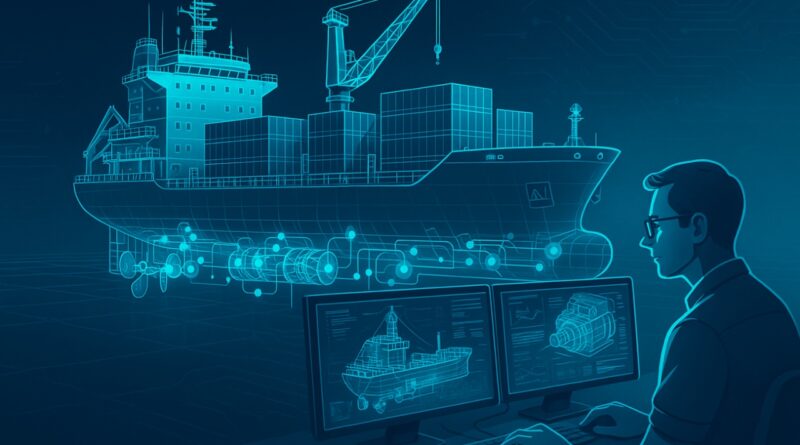
Smart Shipping projects are built around AI route optimisation, digital emissions monitoring, autonomous vessel control, and smart port energy systems. Several solutions use machine learning to analyse vessel performance, reduce fuel consumption, and schedule port operations more efficiently.
Notable tech themes:
AI-driven routing and scheduling
Onboard sensor platforms
Digital twins and emissions dashboards
Autonomous navigation pilots
Regional leaders:
London – 8 projects
South East England – 7 projects
South West England – 4 projects
North West England – 3 projects
This strand reflects the growing role of digitalisation in clean shipping, integrating software with onboard and port-based hardware.