
FLIBS 2026: From Hybrid Propulsion to Research-Capable Superyachts
New launches at the Fort Lauderdale International Boat Show highlight advances in propulsion, lightweight construction and vessel design. Beyond these innovations, a more significant development is emerging: the transformation of private yachts into sophisticated platforms for ocean exploration and scientific research.
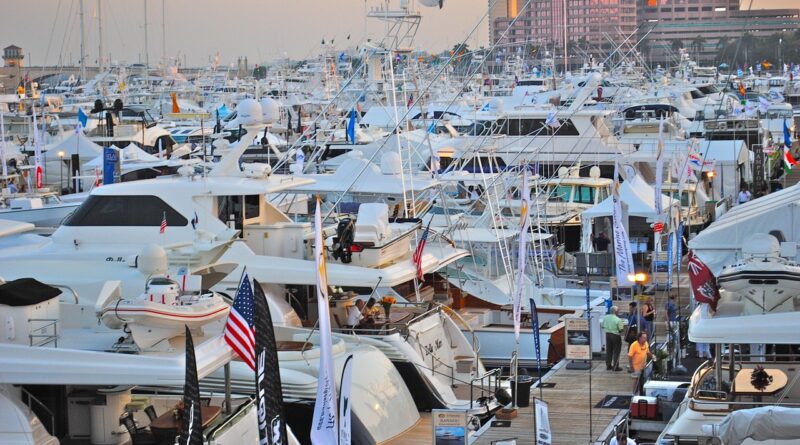
The 67th Fort Lauderdale International Boat Show, taking place from 28 October to 1 November 2026, brings together more than 50 anticipated boat debuts alongside some of the world’s largest superyachts. Several exhibits offer an interesting perspective on how yacht engineering is evolving, with greater emphasis on energy management, operational capabilities and specialised applications.
Propulsion and Hull Efficiency
Among the most technically significant launches is the Pearl 100 Hybrid, the British builder’s first hybrid yacht. The approximately 30-metre flagship combines twin 2,000 hp MAN diesel engines with e-Motion electric motors integrated into a shaft-drive propulsion system.
The arrangement introduces opportunities for electric manoeuvring, quieter operation and more flexible power management. However, the real measure of hybrid technology lies in its performance across different operating profiles. Battery capacity, generator loading, conversion losses and overall system weight all influence whether meaningful efficiency improvements can be achieved.
The Delta 72, developed with Mannerfelt Design, approaches efficiency through lightweight carbon-fibre construction. Reducing displacement can lower propulsion power requirements, particularly in higher-speed operating regimes. The commercial challenge remains balancing potential fuel savings against construction costs, structural complexity and long-term maintenance.
Meanwhile, the Sunreef Ultima 55, making its US debut, incorporates a foil-assisted multihull design. Foil assistance offers the potential to reduce hydrodynamic resistance without requiring a vessel to operate fully above the water. Its practical benefits depend on speed, loading, sea conditions and the additional drag introduced by the foils themselves.
These developments illustrate three different engineering approaches to efficiency. None can be evaluated adequately through headline speed or range figures alone. Comparable operational data, including fuel consumption across representative duty cycles, would provide a clearer picture of their commercial and environmental benefits.
Explorer Yachts Become Research Infrastructure
Perhaps the most substantial development at FLIBS 2026 is represented by DRAAK, the 92.9-metre Oceanco yacht originally delivered in 2014 and subsequently rebuilt to support scientific research and marine exploration.
Operating as a companion vessel to the 111-metre Leviathan, DRAAK forms part of an exploration initiative associated with the ocean research organisation Inkfish.
The conversion goes considerably beyond the addition of specialist equipment. Oceanco has reconfigured major operational areas, replacing conventional leisure facilities with a dedicated dive centre, medical treatment facilities and a six-person decompression chamber capable of supporting oxygen and Heliox procedures.
A new 12.6-tonne crane, specialist davits and modular equipment-handling arrangements support the deployment and recovery of tenders and other operational assets. Electrical and automation upgrades include renewed power management, monitoring and control systems, alongside more than 18 kilometres of new cabling.
The result demonstrates how an existing superyacht can be fundamentally repurposed for a more demanding operational role.
Other explorer yachts, including the 63.7-metre ice-class Scout, reflect continued demand for long-range vessels capable of operating independently in remote environments. However, expedition capability and scientific research capability are not interchangeable. Dedicated research operations require suitable equipment integration, deployment systems, data infrastructure, trained personnel and operational procedures.
A Broader Opportunity for Yacht Engineering
The convergence of advanced yacht engineering and scientific exploration creates opportunities extending beyond the superyacht sector.
Autonomous underwater vehicles, remotely operated systems, environmental sensors, acoustic monitoring and seabed mapping equipment can potentially be integrated into smaller expedition vessels as well as large research platforms.
Increasingly capable compact systems could enable privately operated vessels to contribute to oceanographic research, biodiversity monitoring and marine data collection without requiring a dedicated research ship for every mission.
For shipyards and technology developers, this opens opportunities in modular equipment integration, launch-and-recovery systems, onboard data processing and adaptable vessel architecture.
FLIBS 2026 illustrates two complementary directions in yacht development: improving the efficiency of conventional recreational vessels and expanding the operational capabilities of yachts beyond leisure.
The longer-term opportunity may lie not simply in building larger or more technologically complex yachts, but in creating vessels that combine private ownership, exploration and useful scientific capabilities.
Boats and Marine Industry Updates and Insights
FLIBS 2026: From Hybrid Propulsion to Research-Capable Superyachts
New launches at the Fort Lauderdale International Boat Show highlight...
Read More
New Boat Builders: Is There Still Room for New Players?
Insights – The Future of Boatbuilding At first glance, the...
Read More
Can European Boat Builders Grow Their Presence in the US Market?
Insights – the US Market The United States remains the...
Read MoreJanuary 2027 Boat Shows: The International Boating Season Begins
Boat and Yacht Shows in January 2027 Insight: From Düsseldorf...
Read More