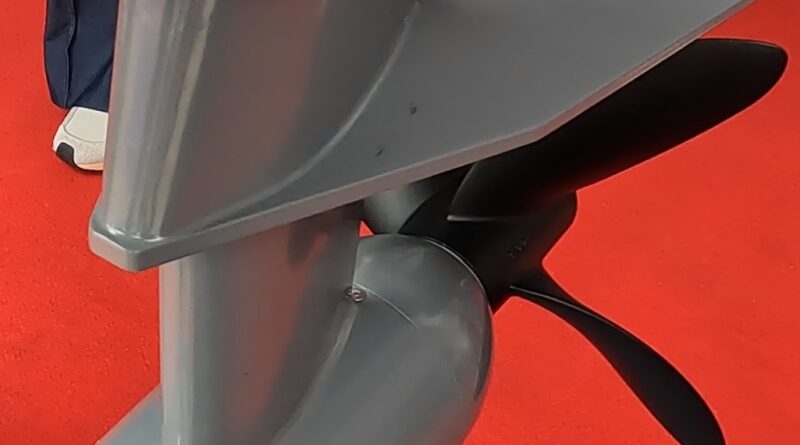
Electrification in the marine sector is steadily moving toward more integrated, high-voltage systems that reduce installation complexity and improve overall vessel efficiency. Modern electric drivetrains are now designed as unified units rather than collections of separate components, allowing shipbuilders to focus on hull and systems engineering rather than full custom integration. This shift reflects a broader trend across the industry: electric systems must be compact, compatible, and easier to position within existing hull layouts.
A Fully Integrated Electric Inboard System
Bosch Engineering is introducing the Electric Drive for Marine applications (EDM), a complete plug-and-play inboard system intended for recreational boats and small commercial vessels. According to the company, the EDM combines the electric motor, gearbox, inverter, onboard charger, heat exchanger, electronic control unit and cooling pumps into a single compact unit. The system is delivered with all required high- and low-voltage cabling, a charge inlet, and a dedicated display with control elements for the cockpit.
The company states that the EDM produces 160 hp (continuous) with a weight of approximately 180 kg, resulting in a power density of around 0.7 kW/kg. For vessels with higher power requirements, Bosch allows two EDM units to be coupled as a twin-drive installation. The system’s installation dimensions are comparable to those of a combustion inboard with similar output, enabling either new builds or retrofit replacements.
Bosch also offers a version where components are supplied separately instead of preassembled. This option supports installations where engine-bay geometry is limited and components must be positioned independently.
Thermal Management and Battery Compatibility
Bosch notes that the system manages both drivetrain cooling and thermal control for the high-voltage battery. While the battery is not supplied with the EDM, the system uses a standardized communication interface intended to ensure compatibility with multiple battery suppliers. The integrated charger simplifies the vessel’s electrical architecture by handling charging directly through the EDM unit.
Additional features include diagnostic support, system responses to unexpected faults, and optional cellular connectivity for over-the-air updates and remote parameter monitoring.
Where Bosch Is Presenting the System
Bosch Engineering is showcasing the EDM within the broader programme of marine technology events surrounding METSTRADE, alongside companies working on electric propulsion, modular drivetrain platforms and advanced vessel integration.
Position in the Market Landscape
Other companies in the propulsion sector—such as those working on pod drives, hybrid platforms or modular electric outboards—are also advancing integrated and high-efficiency systems. While each takes a different technical approach, many share the same goals: simplified installation, higher power density, and easier integration with vessel electrical architectures.