Monaco Energy Boat Challenge: Electric Boats Get Faster — Frauscher Breaks the Record Again
Electric boating is entering a new phase. The discussion is no longer simply about range and replacing conventional engines. Increasingly, it is about speed, performance and what the next generation of electric boats can achieve.
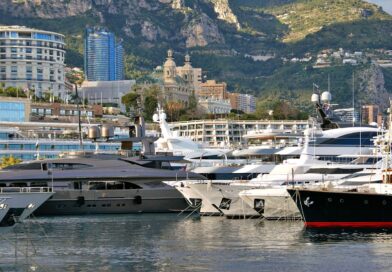
The Monaco Energy Boat Challenge has become an important showcase for this transition, bringing together boatbuilders, technology companies, engineers and innovators working on electric propulsion, hydrogen, energy efficiency and advanced marine technologies.
And in 2026, one number stood out: 51.05 knots.
Record Broken. Again.
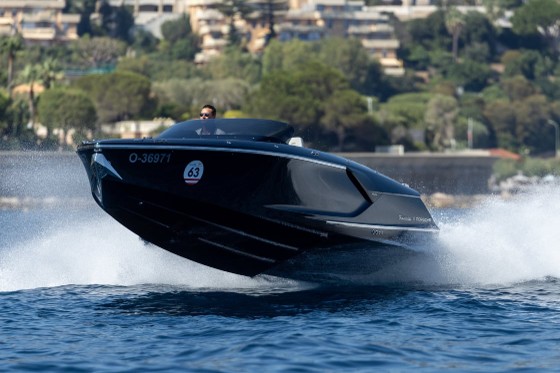
At the 2026 Monaco Energy Boat Challenge, the Frauscher x Porsche 790 Spectre established a new YCM Speed Record of 51.05 knots, beating the partnership’s own record from only a year earlier.
In 2025, the Frauscher x Porsche 850 Fantom achieved 49.84 knots over a one-kilometre course. One year later, the new 790 Spectre pushed the benchmark beyond 50 knots.
Frauscher describes it as the world’s fastest series-production electric boat. Importantly, this is not simply an experimental record-breaking prototype. The 790 Spectre was developed for private customers and retains the premium finish expected from the Frauscher range.
Electric Performance Is Changing
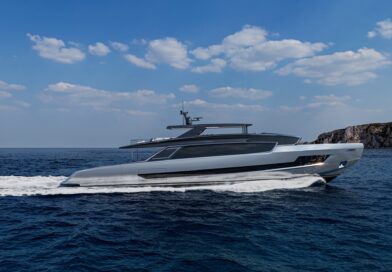
The 790 Spectre was developed around the fully electric powertrain of the Porsche Macan Turbo. Its battery, electric motor and charging electronics influenced the construction, weight distribution and design of an entirely new hull.
This integrated approach is significant. With electric boats, efficiency matters enormously. Battery weight, hydrodynamic resistance, thermal management and energy consumption all influence both speed and range.
Rather than simply replacing a combustion engine with an electric motor, manufacturers are increasingly designing the hull, propulsion and energy system as one complete platform.
Monaco as a Technology Showcase
This is also what makes the Monaco Energy Boat Challenge increasingly relevant to the wider marine industry.
Advanced batteries, electric and hydrogen propulsion, lightweight materials, foiling, charging systems and intelligent energy management are being tested in an environment where efficiency and performance can be measured directly.
For boatbuilders and equipment manufacturers, it provides an early view of technologies that could migrate into production boats. For buyers, it offers a glimpse of what may soon become available in the premium recreational market.
What Comes After 50 Knots?
Electric boats still face challenges, particularly battery weight, sustained high-speed range, charging infrastructure and cost.
But 51.05 knots from a series-production electric boat shows how quickly the boundaries are moving.
The next race may not simply be about going faster. It will be about combining speed, range, efficiency and usability.
Electric boating is getting faster. The more interesting question now is how much further it can go.
Photo credit: Monaco Energy Boat Challenge.